
No truck
moves empty.
CratePoint is a full-truck logistics platform for emerging-market beverage distribution. We match backloads, run agent-based collection points for returnable bottles, and measure CO₂e on every case delivered.
The problem
Trucks run empty. Empty bottles sit trapped. Nobody can see either one happening.
Empty running
T1/T2 distribution trucks deliver full and return light or empty. Every empty kilometer is fuel burned, CO₂ emitted, and margin lost.
Trapped bottles
African beverage distribution runs on returnable bottles and crates. Empties are deposit currency, so retailers hoard them until the next order. Cycle times stretch, bottlers over-purchase glass, and shop floor space disappears under crates.
Zero visibility
Between factory gate and shop shelf, bottlers cannot see where their glass is, and the informal retail trade produces no demand signal until an order lands.
The solution
A full truck in both directions.
Backload Matching
Pairs every outbound delivery with a return load, third-party freight or empties, across mixed fleets (owned, contracted, informal transporters). Kills empty return legs; removes whole trips from the road.
The CratePoint Network
Agent-run collection points positioned on existing truck routes. Retailers deposit empties anytime for instant crate credit; trucks deliver 100% full and sweep dense aggregated points on the return leg: one stop instead of dozens, zero capex per point.
Carbon & Demand Intelligence
Automated CO₂e per trip and per case, computed from GPS and load data the platform already generates: audit-ready Scope 3 data. Point-level intake doubles as a live consumption signal for replenishment forecasting, no POS integration required.
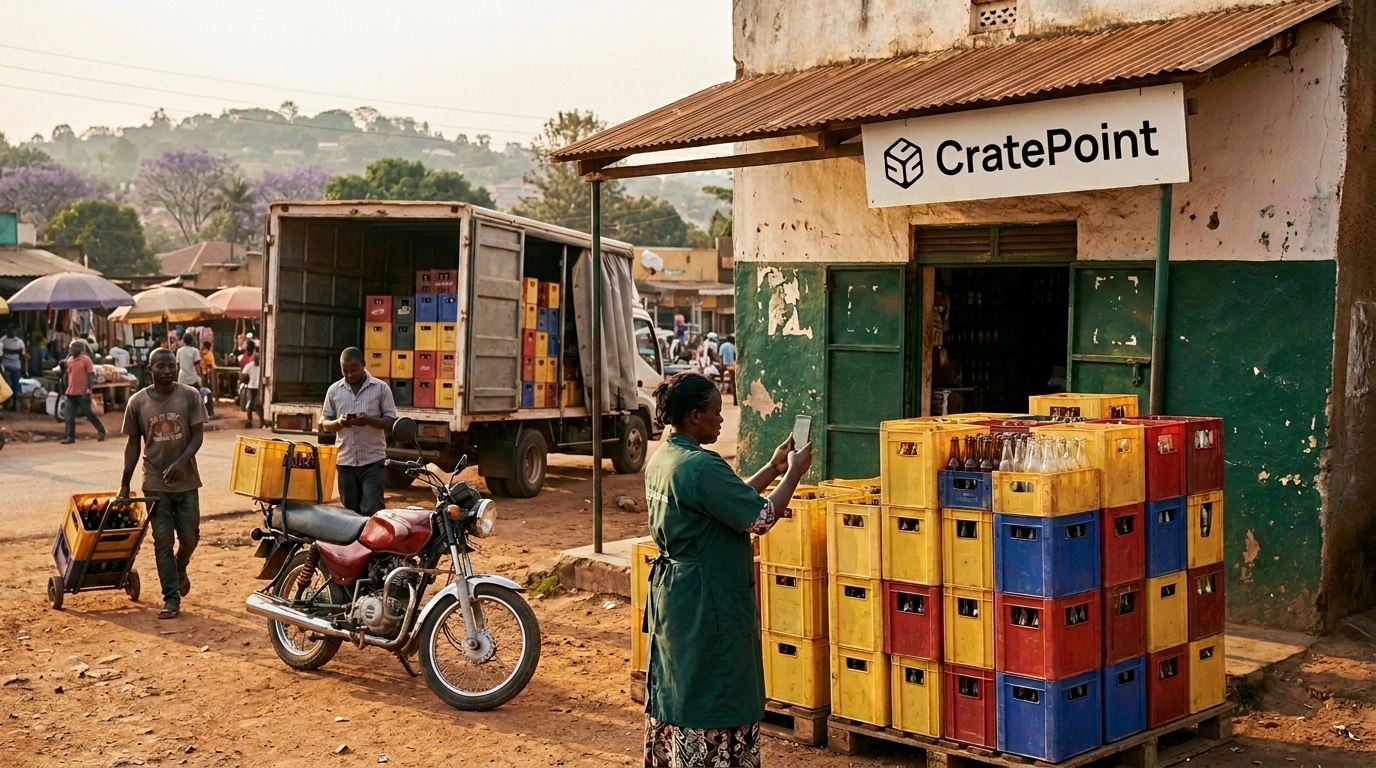
CratePoint redesigns returnable-glass logistics around agent-run Collection Points positioned on existing truck routes. Retailers deposit empties at nearby points (photo-verified by our crate-recognition model or manually by a CratePoint merchant) and receive instant crate credit in the app against their next order, freeing shop space and unlocking deposit value early.
Trucks deliver 100% full and sweep aggregated points on the return leg: one stop instead of dozens, no detours, near-zero marginal emissions per recovered crate. Every handover is ledgered, giving bottlers an auditable chain of custody for glass in the trade, and point-level intake doubles as a live consumption signal, enabling replenishment forecasting 4+ weeks out with no POS integration.
Impact
Every litre of diesel not burned is CO₂e avoided and money saved.
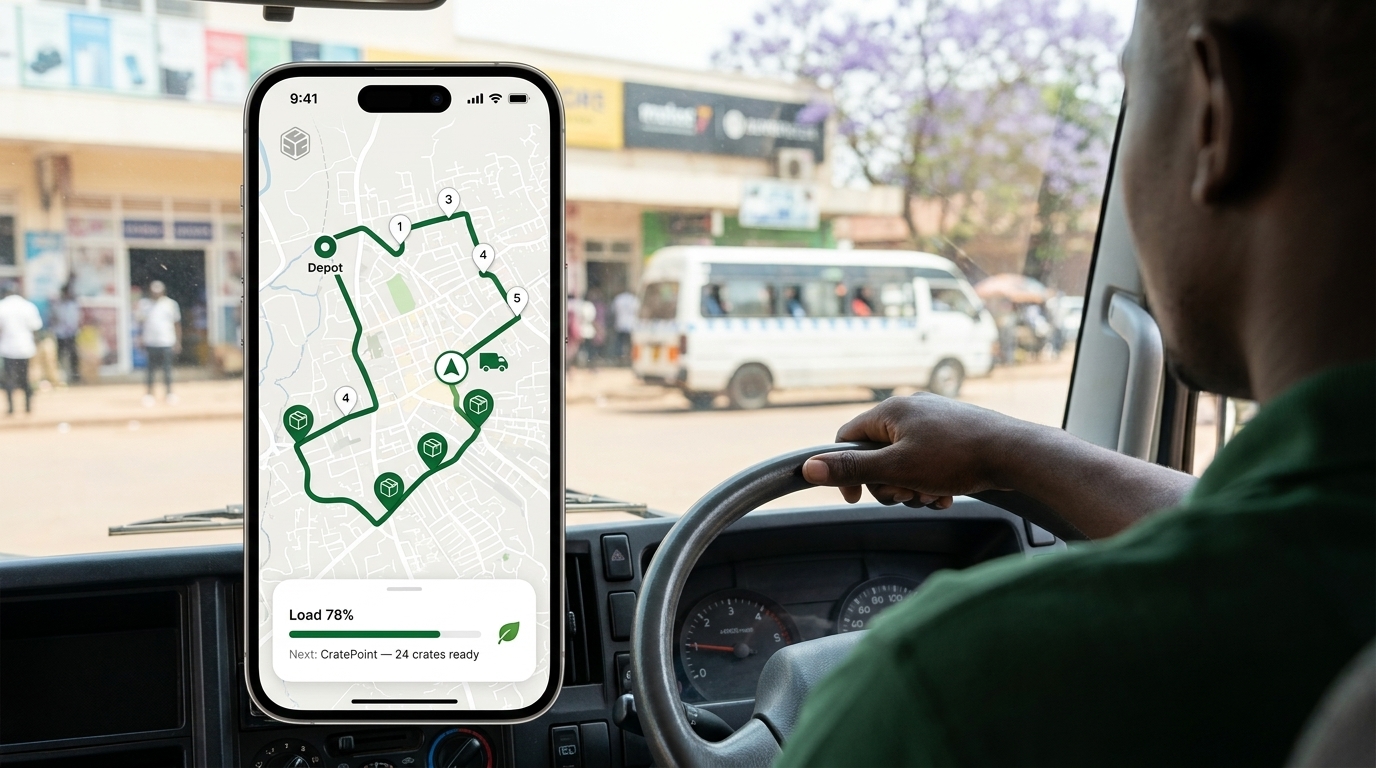 Backload match
The driver app displaying an optimized return leg.
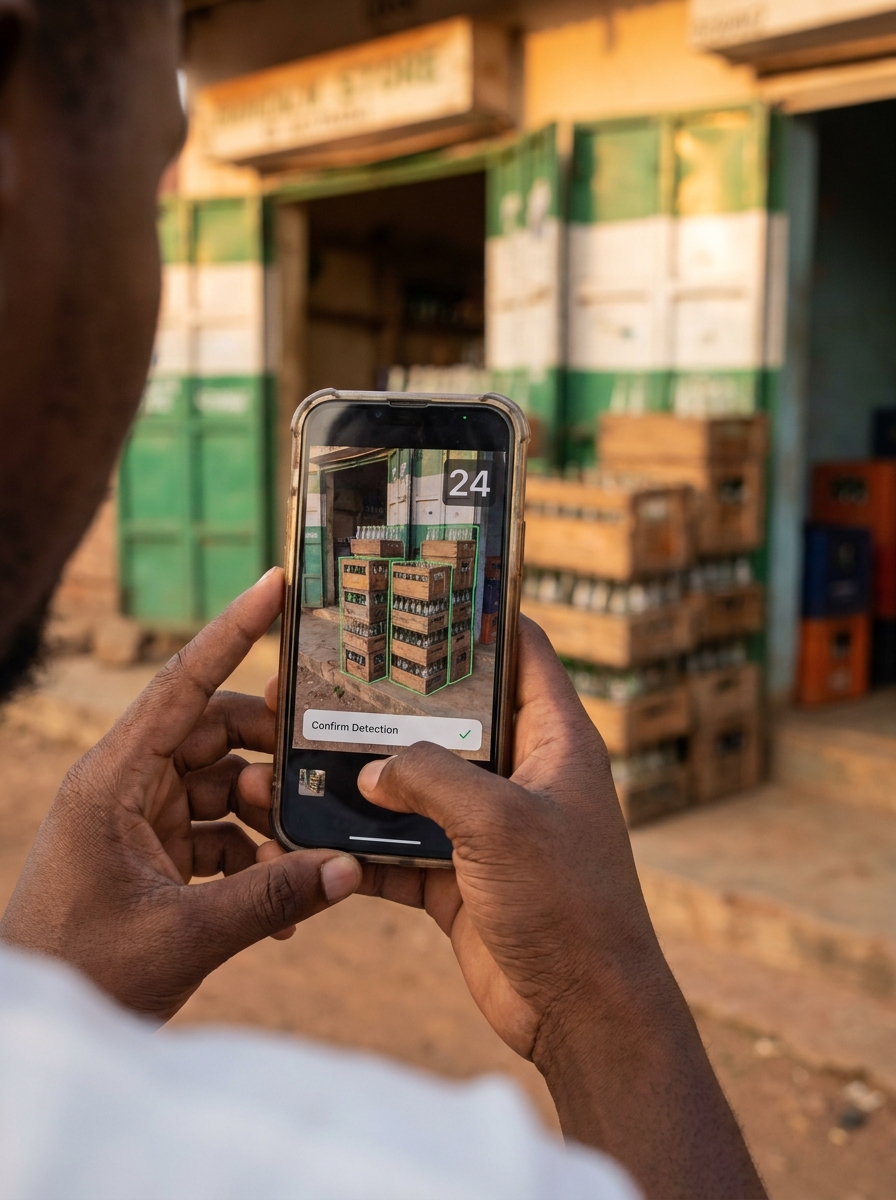 Crate-count camera
Image recognition to speed up verification at the CratePoint
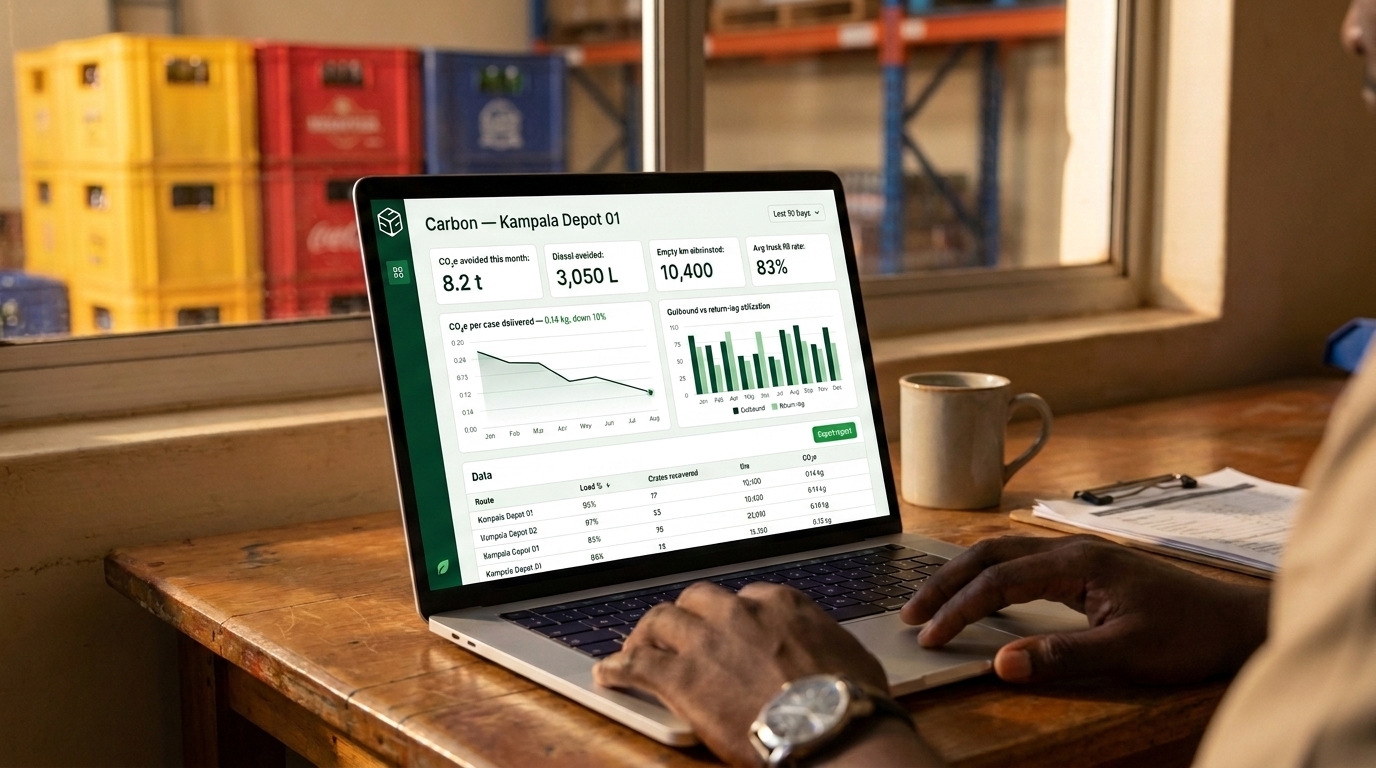 Carbon dashboard
Live analytics quantifying and visualizing impact
A typical 20-truck depot runs ~600,000 truck-km per year. Where 40% of kilometers are empty running, matching even half of those return legs removes ~120,000 km: roughly 36,000 litres of diesel and ~95 tonnes of CO₂e per depot per year, plus faster recovery of returnable glass, which is trapped working capital in African beverage distribution. AB InBev and Coca-Cola’s bottlers operate hundreds of comparable depots across the continent.
Illustrative model: the pilot establishes real baselines.
~120,000
truck-km eliminated / depot / yr
~36,000 L
diesel avoided / depot / yr
~95 t
CO₂e avoided / depot / yr




Become a partner
We’re looking for a distributors ready to test and adopt CratePoint in their depots and routes.
Become a partner